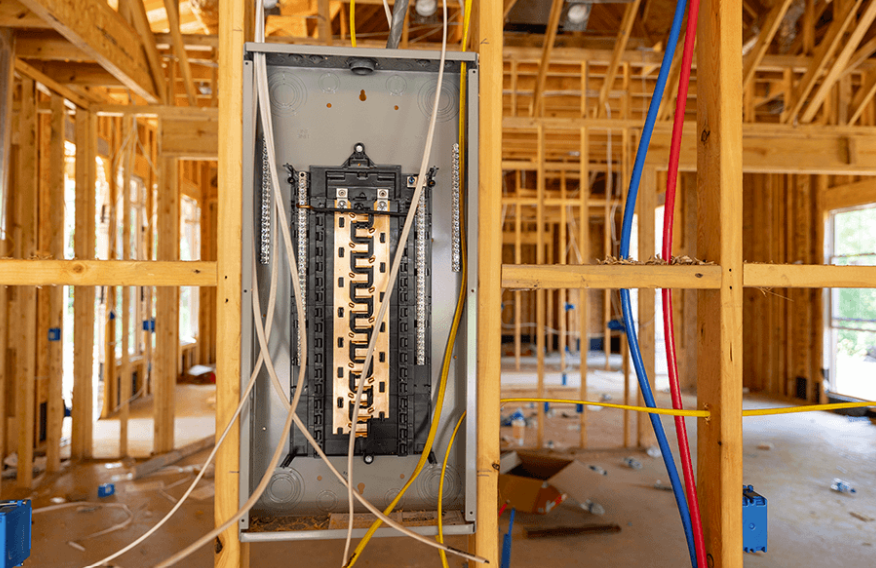
The location of an electrical panel affects more than convenience. Placement influences accessibility, environmental exposure, maintenance activities, emergency response, and compliance with electrical installation requirements.
Whether a property is newly constructed or undergoing renovation, electrical distribution equipment should be located with both present needs and long-term usability in mind.
Understanding common installation considerations can help homeowners participate more effectively in planning discussions with qualified electricians.
Why Electrical Panel Location Matters
An electrical panel contains switching and protective equipment that must remain accessible for inspection, operation, and maintenance.
Poor placement may expose the enclosure to damage or make electrical servicing difficult.
Electrical codes establish requirements for working space, accessibility, mounting, and protection from unsuitable environmental conditions.
These requirements can vary according to location and installation type.
Accessibility and Working Clearance
Electrical equipment generally requires adequate working space around it.
This space allows electricians to inspect and service equipment while reducing the likelihood of accidental contact or restricted movement.
Keeping the Panel Unobstructed
Storage boxes, furniture, shelving, and other objects should not block access to electrical distribution equipment.
Clear access is particularly important when power must be disconnected quickly.
Door and Cover Operation
Panel doors and protective covers must be capable of operating as intended.
The installation should permit appropriate access without unsafe obstructions.
Required clearances should be confirmed using the electrical code applicable to the property.
Environmental Considerations
Electrical panels should be protected from conditions that can damage components or reduce reliability.
Moisture Exposure
Water can contribute to corrosion, insulation deterioration, and electrical faults.
Indoor equipment should not be installed where it is likely to encounter unsuitable moisture conditions.
Outdoor Installations
Some properties have electrical service equipment installed outside the building.
Outdoor installations require enclosures suitable for their exposure conditions.
Weather-resistant equipment must still be installed correctly to prevent water intrusion.
Heat and Ventilation
Excessive heat can affect electrical equipment and connected conductors.
Installation conditions should remain within manufacturer and code requirements.
Choosing a Practical Location
Electrical panels may be found in utility areas, garages, basements, or designated electrical spaces, depending on local regulations and building design.
No single location is ideal for every property.
The selected area should provide required access while protecting electrical equipment from damage.
Avoiding Unsuitable Areas
Certain locations may be prohibited or restricted under applicable electrical standards.
For example, residential panel installations in clothes closets or bathrooms may violate relevant requirements, depending on the equipment and jurisdiction.
A licensed electrician should confirm the rules before selecting a location.
Planning for Future Electrical Circuits
Homeowners sometimes add appliances or electrical equipment after the original installation.
Examples include workshop machinery, heat pumps, outdoor equipment, and electric vehicle chargers.
When designing a new installation, it can be useful to consider reasonable future circuit needs.
However, spare breaker spaces do not automatically mean the electrical service has sufficient capacity for additional loads.
Actual capacity must be determined through appropriate calculations.
Relocating Existing Electrical Equipment
Moving a panel can involve more than transferring an enclosure to another wall.
The project may require changes to service conductors, branch-circuit wiring, grounding arrangements, and related electrical infrastructure.
Permits, inspections, and utility coordination may also be necessary.
During major renovations, an electrical panel upgrade may be considered if the existing equipment is unsuitable for planned electrical demands or no longer meets project requirements.
The relocation and equipment selection should be developed as part of a coordinated electrical design.
Safety During Electrical Installation
Panel installation involves exposure to potentially dangerous electrical energy.
Even equipment that appears disconnected can contain energized service components.
Installation work should be completed by qualified electricians using proper isolation, verification, and protective procedures.
Homeowners should not attempt to relocate or wire distribution panels without appropriate qualifications.
Conclusion
Electrical panel placement is an important element of residential electrical design.
Accessibility, environmental protection, working clearance, and future circuit requirements all influence the suitability of an installation.
Careful planning with qualified professionals helps ensure distribution equipment remains safe, functional, and accessible throughout its service life.